

Posted by Lucent Team

TL;DR:
- Afternoon caffeine crashes happen due to adenosine buildup and blood sugar fluctuations.
- Microdosing caffeine and pairing it with food or water help maintain steady energy.
You grab your carefully chosen green tea mid-morning, feel sharp for about two hours, then hit a wall that no amount of willpower can push through. Sound familiar? Afternoon energy crashes are one of the most common complaints among professionals who rely on caffeine to stay productive, and the reflex response of reaching for another cup rarely fixes the root problem. The FDA’s safe daily limit sits at 400mg of caffeine for healthy adults, roughly 2–3 cups of coffee. Exceed that regularly, and you’re not just risking crashes. You’re inviting anxiety, disrupted sleep, and a deeper dependence that digs the hole wider.
Key Takeaways
| Point | Details |
|---|---|
| Avoid caffeine overload | Keep your daily caffeine intake under 400mg to minimize crashes and jitters. |
| Smart timing matters | Space smaller caffeine doses and delay your first cup to sync with your body’s rhythms. |
| Pair with nutrition | Eat protein-rich, balanced meals with caffeine to slow its absorption and support steady energy. |
| Embrace natural boosts | Hydration, exercise, naps, and sunlight offer crash-free alternative energy. Lucent can support this with steady, tea-based energy designed for focus. |
Understand why caffeine crashes happen
To solve the energy slump, it helps to know what causes it in the first place.
Caffeine works by blocking adenosine receptors in your brain. Adenosine is the chemical that signals tiredness, and when caffeine occupies those receptors, you feel alert. The problem? Adenosine keeps building up in the background. The moment caffeine clears your system, all that accumulated adenosine floods in at once. That’s the crash. It’s not weakness. It’s chemistry.
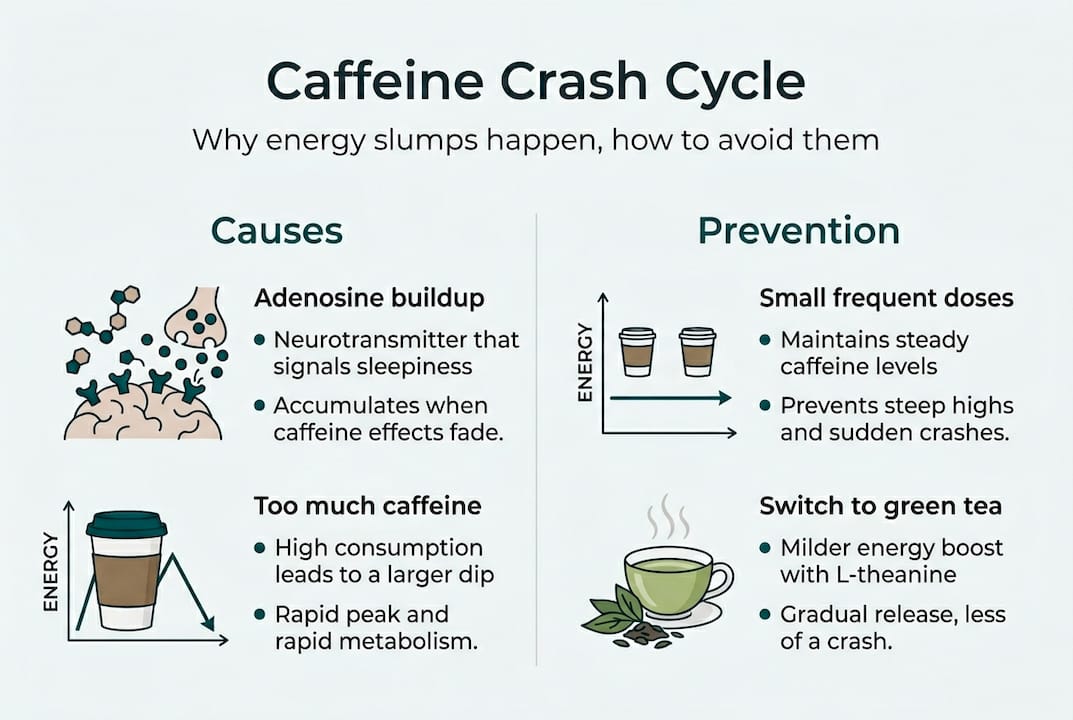
But adenosine rebound is only part of the story. A significant caffeine dose also triggers an adrenaline response, which temporarily raises blood sugar. When that spike fades, blood sugar drops, leaving you feeling foggy and flat. Pair that with mild withdrawal symptoms if you’re a regular user, and you’ve got a recipe for the 2pm slump that feels impossible to escape.
What makes crashes worse:
- High single doses create steeper peaks and deeper valleys
- Poor sleep amplifies adenosine buildup, making the rebound hit harder
- High tolerance means you need more caffeine for the same effect, increasing the crash risk
- Skipping food removes the buffer that slows caffeine absorption
Your genetics also play a bigger role than most people realize. Genetic variants in CYP1A2 and ADORA2A genes significantly alter how fast you metabolize caffeine and how intensely your receptors respond. Slow metabolizers can feel jittery and crash hard from a single cup. Fast metabolizers barely feel the same dose. These aren’t small differences; they can mean the gap between a productive afternoon and a foggy one.
| Factor | Low crash risk | High crash risk |
|---|---|---|
| Caffeine dose | Under 100mg per sitting | Over 200mg in one go |
| Sleep quality | 7–9 hours per night | Under 6 hours |
| Metabolism type | Fast metabolizer | Slow metabolizer |
| Food pairing | Protein or fat alongside | Fasted/empty stomach |
| Daily total | Under 300mg | Over 400mg |
And here’s the trap that catches most professionals: reaching for more caffeine when you crash. That extra cup might blunt the slump temporarily, but it stacks the adenosine pressure higher and pushes the real crash later into the day, directly threatening your sleep quality. Poor sleep the next night means you need even more caffeine tomorrow. The cycle deepens.
Compare matcha vs coffee vs energy drinks and you’ll see that the source of caffeine matters almost as much as the amount.
Preparation: Smart caffeine habits for steady energy
Once you understand the crash, proactive strategies pave the way for consistent energy.
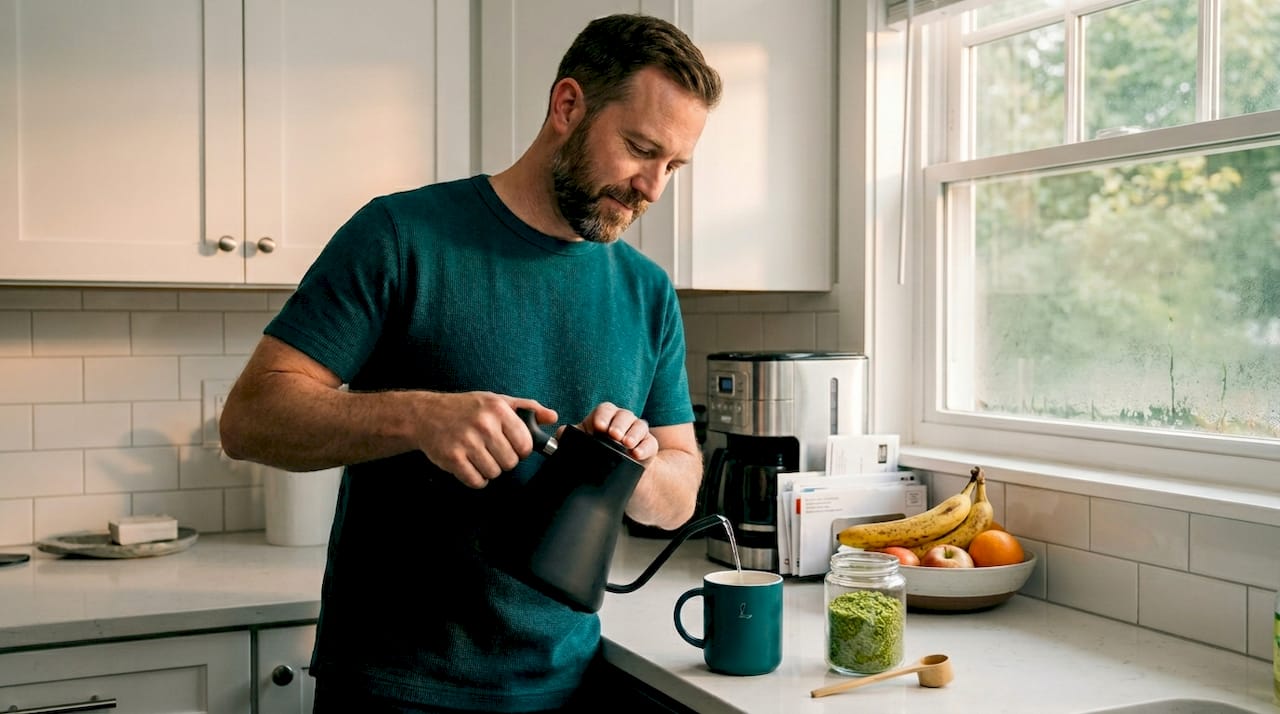
The biggest mistake most professionals make is treating caffeine like an on/off switch rather than a dial. One large dose, one sharp peak, one hard crash. Spreading your intake across the day, sometimes called microdosing caffeine, keeps blood levels more stable and adenosine from piling up all at once.
Research supports smaller, frequent caffeine doses taken every 2–3 hours as more effective at maintaining steady alertness than a single bolus. Think of it like a slow-drip rather than a flood.
Five habits that dramatically reduce crash risk:
- Spread doses across the morning rather than front-loading your caffeine early
- Pair every caffeinated drink with food containing protein, healthy fat, or fiber to slow absorption and keep blood sugar stable
- Drink water alongside caffeine since caffeine is mildly diuretic, even mild dehydration worsens brain fog. Aim for about 250ml of water with each caffeinated beverage
- Delay your first dose by 60–90 minutes after waking. Your cortisol peaks naturally in the first hour, so layering caffeine on top just builds tolerance faster and sets you up for an earlier crash
- Set a hard cutoff time at least 6–8 hours before your planned bedtime. Caffeine has a half-life of around 5–6 hours, meaning a 3pm coffee still has half its caffeine in your system at 9pm
Pro Tip: If you typically reach for caffeine the moment you wake up, try moving that first drink to 90 minutes post-wake for two weeks. Most people report feeling more naturally alert in the morning and experiencing fewer afternoon slumps.
For a natural caffeine source that’s easier to time precisely, green tea for focus offers a gentler, more gradual release that fits this approach naturally.
| Approach | Peak effect | Crash risk | Sleep impact |
|---|---|---|---|
| Single large dose (200mg+) | Sharp, fast | High | Significant |
| Microdosing (50–75mg, every 2–3h) | Gradual, steady | Low | Minimal |
| Late-day caffeine (after 3pm) | Moderate | Moderate | High |
| Caffeine with protein/fat | Slower onset | Low | Low |
Execution: A step-by-step plan to minimize crashes
With the groundwork set, let’s build a daily playbook to avoid energy dips altogether.
Structure makes the difference between good intentions and reliable results. Here’s a practical daily framework you can follow starting tomorrow.
Your daily anti-crash caffeine plan:
- Wake up (0 min): Drink 500ml of water before anything else. Rehydrating after sleep supports baseline alertness without any caffeine needed.
-
60–90 minutes post-wake: Have your first caffeinated drink. Keep the dose between 50–100mg. Pair it with a protein-rich breakfast (eggs, Greek yogurt, or a protein smoothie) to slow absorption and stabilize blood sugar.
If you prefer something lighter and more consistent, this is where a matcha-based option like Lucent can fit well, delivering caffeine alongside naturally occurring L-theanine for a smoother start. - Mid-morning (2–3 hours later): If you need a second dose, keep it at 50–75mg. Smaller, more frequent amounts often sustain energy better than larger spikes. A steady option like Lucent works well here too, especially if you want to maintain focus without pushing into overstimulation.
- Lunch: Eat a balanced meal with protein, complex carbs, and healthy fats. This is not optional. Skipping lunch or eating poorly is one of the fastest routes to a 2pm crash, regardless of caffeine.
- Early afternoon (12:30–1:30pm): A small final caffeine dose if needed, but make this your last one. Pair it with a handful of nuts or a piece of fruit to keep blood sugar stable. This is also an ideal slot for a matcha-based drink, where the combination of caffeine and L-theanine supports a more even, sustained energy curve. Lucent is designed specifically for this kind of steady, early afternoon focus.
- Mid-afternoon reset (2:30–3:30pm): Skip the caffeine and instead try a 15–20 minute nap, a 10-minute walk outside in natural light, or both. These reset alertness more sustainably than more caffeine.
- Evening: No caffeine. Protect your sleep. Quality sleep is the single most powerful tool for reducing tomorrow’s need for caffeine.
“The goal isn’t to eliminate caffeine. It’s to use it so precisely that you never feel like you need to chase it.”
Why biohackers use green tea comes down to exactly this: the natural L-theanine and caffeine combination provides alertness without the jagged edges that lead to chasing more.
Pro Tip: Consider rotating caffeine sources weekly. If you drink coffee Monday through Wednesday, switch to matcha or green tea Thursday and Friday. Rotating sources and occasionally tapering for 7–10 days restores caffeine sensitivity, meaning lower doses deliver the same performance you used to need double the caffeine to achieve.
Upgrade your energy strategy with Lucent
If you’ve made it through this guide, you already have the knowledge. What comes next is putting it into practice with tools designed to support exactly this kind of intentional energy management.
Lucent is built for precisely this moment. Our zero sugar matcha drinks deliver a naturally calibrated ratio of caffeine and L-theanine, the combination the research consistently points to for smoother, steadier alertness without the crash. We’ve added Vitamin B6, Vitamin B12, magnesium, and Vitamin C because sustainable performance needs more than just caffeine management. It needs the right nutritional foundation underneath it. Explore the full Lucent Matcha Energy Drink range and discover Lucent’s benefits to see how clean, functional ingredients can replace the trial and error entirely. Your energy system deserves better than chasing crashes.
Frequently asked questions
What is the safest daily amount of caffeine to avoid crashes?
Most adults should stay below 400mg per day, roughly 2–3 cups of coffee, to reduce crash risk and minimize side effects like anxiety and disrupted sleep.
Do certain foods help reduce caffeine crashes?
Yes, pairing caffeine with meals high in protein, fat, or fiber slows caffeine absorption and stabilizes blood sugar, which directly reduces the intensity and likelihood of a crash.
How can I tell if I’m a slow or fast caffeine metabolizer?
If you feel jittery or crash easily after a single small dose, you’re likely a slow metabolizer due to CYP1A2 variants. Minimal effects from standard doses and high tolerance usually indicate a fast metabolizer.
What’s the best time to have my first caffeine dose?
Waiting 60–90 minutes after waking lets your natural cortisol peak do its job first, which reduces tolerance buildup and supports steadier energy across the day.
Are caffeine alternatives really effective for focus?
Absolutely. Protein-rich meals, hydration, short naps, movement breaks, and sunlight exposure each independently improve alertness and can reduce your reliance on caffeine without sacrificing performance.















