

Posted by Lucent Team

TL;DR:
- Green tea’s compounds like L-theanine and EGCG reduce cortisol and promote calm alertness.
- Regular consumption of 2 to 4 cups daily supports stress regulation without dramatic cortisol spikes.
- Quality green teas with a low CE/TA ratio, such as Gyokuro and Matcha, optimize stress reduction benefits.
Green tea contains a surprising paradox: it holds both a mild stimulant and a natural calming agent in the same cup. Most people assume any caffeinated drink raises stress hormones equally, but that assumption misses something important. Green tea interrupts signaling pathways for cortisol synthesis in ways coffee simply cannot match. This guide breaks down the science behind green tea’s effect on cortisol, identifies which compounds do the heavy lifting, reviews what clinical research actually shows, and gives you a practical framework for using green tea to support calmer, sharper days.
Table of Contents
- Understanding cortisol and stress: Why it matters
- How green tea works on stress: Key compounds and their effects
- What the science says: Research evidence behind green tea and cortisol
- Choosing the best green tea and how to use it for stress
- Green tea vs coffee and other stress drinks: What makes it unique?
- Our take: What most people miss about green tea and cortisol
- Take the next step with natural green tea solutions
- Frequently asked questions
Key Takeaways
| Point | Details |
|---|---|
| L-theanine reduces stress | Green tea’s L-theanine content helps promote relaxation and lower cortisol naturally. |
| Choose high-theanine teas | Gyokuro and Sencha varieties offer the best balance for stress relief and calm focus. |
| Green tea outperforms coffee | It causes a milder cortisol response than coffee, making it safer for stress-sensitive individuals. |
| Dose matters | Stick to 2-4 cups daily to enjoy benefits without unwanted side effects. |
| Supplements need caution | High-dose green tea extracts can be harmful; brewing your tea is safest. |
Understanding cortisol and stress: Why it matters
To understand how green tea plays a role, it helps to first know what cortisol does.
Cortisol is your body’s primary stress hormone, produced by the adrenal glands in response to perceived threats or pressure. It’s not inherently bad. Short bursts of cortisol sharpen your focus, mobilize energy, and help you respond to challenges quickly. The problem starts when cortisol stays elevated for too long.
Chronic high cortisol is one of the most underappreciated drivers of mental and physical decline. It disrupts sleep, weakens immune function, impairs memory consolidation, and makes it harder to regulate mood. If you’ve ever noticed that sustained stress leaves you foggy, irritable, or exhausted even after a full night’s sleep, elevated cortisol is often the culprit.
Common signs of chronically elevated cortisol include:
- Persistent fatigue despite adequate sleep
- Difficulty concentrating or retaining information
- Increased anxiety or a sense of being “wired but tired”
- Weight gain, particularly around the midsection
- Heightened sensitivity to everyday stressors
- Disrupted sleep cycles, especially waking at 2 to 4 a.m.
These symptoms are not just uncomfortable. Over time, sustained cortisol elevation is linked to cardiovascular disease, metabolic disorders, and accelerated cognitive aging. That’s why more health-conscious professionals are looking for natural, sustainable ways to keep cortisol in check rather than relying solely on pharmaceutical options.
“Natural approaches to cortisol regulation are gaining traction because they address the root of the stress response rather than simply masking symptoms. Green tea is one of the most studied options in this space.”
The appeal of non-pharmaceutical cortisol management is real. Prescription interventions carry side effects and are typically reserved for clinical conditions like Cushing’s syndrome. But for the everyday professional dealing with deadline pressure, screen fatigue, and a packed schedule, lifestyle tools matter enormously. Diet, sleep, movement, and targeted functional beverages all play a role.
This is exactly where green tea’s cortisol-reducing effects become relevant. Human studies, including randomized controlled trials (RCTs), consistently show that green tea consumption or its active compounds can reduce stress-induced cortisol levels. That’s not marketing language. That’s clinical evidence worth paying attention to.
How green tea works on stress: Key compounds and their effects
With a clear understanding of cortisol’s role, we can examine how green tea’s unique blend of compounds can directly affect stress.
Green tea isn’t just one thing. It’s a cocktail of bioactive molecules, each with a distinct mechanism. Three stand out for cortisol and stress management: L-theanine, EGCG (epigallocatechin gallate), and caffeine.
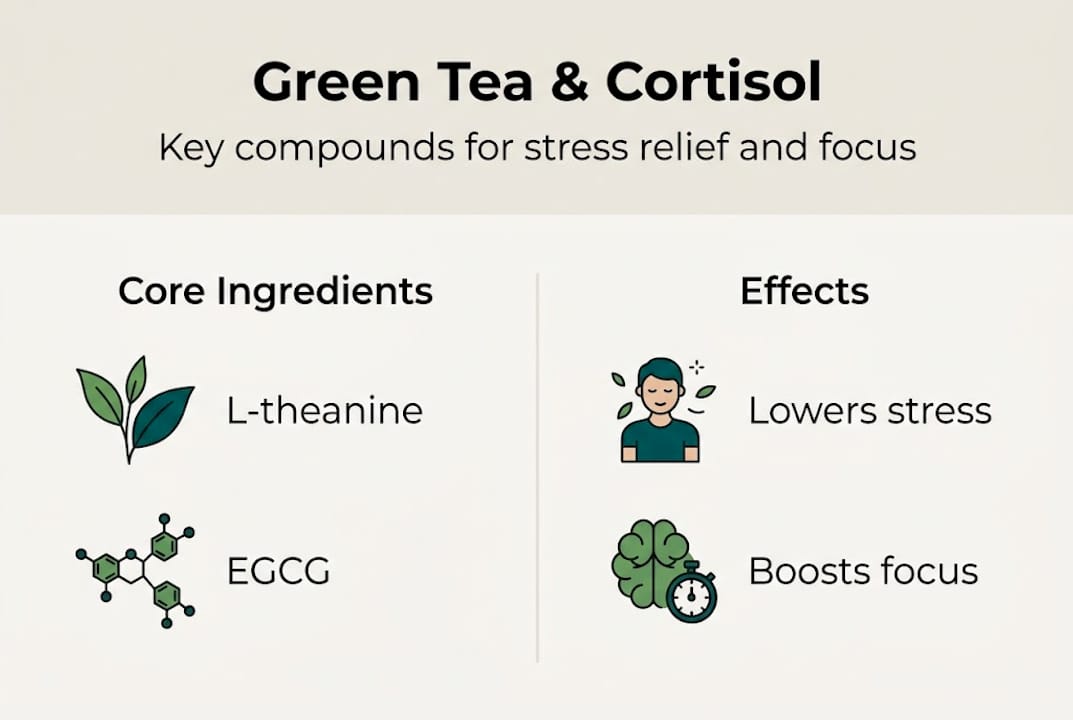
L-theanine is an amino acid found almost exclusively in tea plants. It crosses the blood-brain barrier and promotes the production of alpha brain waves, the same mental state associated with calm alertness, the feeling of being relaxed but fully present. L-theanine also modulates the HPA axis (hypothalamic-pituitary-adrenal axis), which is the central command system for cortisol release. By dialing down HPA reactivity, L-theanine promotes calm and reduces the cortisol spike triggered by acute stress.
EGCG is the dominant catechin antioxidant in green tea, and its role in cortisol regulation is direct. EGCG affects cortisol production by binding to and inhibiting 11β-HSD1, the enzyme responsible for converting inactive cortisone into active cortisol inside your tissues. Less enzyme activity means less active cortisol circulating in your body, even under stress. This is a meaningful mechanism, not a vague antioxidant benefit.
Caffeine in green tea is real but modest, typically 25 to 50 mg per cup compared to 80 to 100 mg in coffee. Caffeine can mildly stimulate cortisol, but in green tea, L-theanine acts as a buffer, softening that stimulation and extending the energy curve into something smoother and more sustained.
| Compound | Primary mechanism | Effect on cortisol |
|---|---|---|
| L-theanine | Alpha wave promotion, HPA axis modulation | Reduces stress-induced cortisol |
| EGCG | Inhibits 11β-HSD1 enzyme | Lowers active cortisol synthesis |
| Caffeine | Mild CNS stimulation | Minor cortisol increase, offset by L-theanine |
Key benefits of this compound trio:
- Calm focus without sedation
- Reduced cortisol response to acute stressors
- Sustained alertness without the post-caffeine crash
- Antioxidant protection against stress-related cellular damage
If you want to understand more about how these compounds support green tea for mental clarity, the research is consistent and growing. The EGCG benefits extend well beyond cortisol too, touching inflammation, metabolism, and neuroprotection.
Pro Tip: Matcha contains significantly higher concentrations of L-theanine than standard brewed green tea because the whole leaf is consumed. If you’re specifically targeting cortisol reduction and mental calm, matcha is worth prioritizing. You can also explore calming green tea compounds and how they support focus under pressure.
What the science says: Research evidence behind green tea and cortisol
The science matters, so let’s dig into what actual studies reveal when real people use green tea for stress and cortisol management.
The evidence base is more solid than most people realize, though it’s still maturing. Here’s what the research actually shows:
-
Acute stress trials: A randomized double-blind placebo-controlled trial demonstrated that a green tea ingredient significantly reduced cortisol levels in healthy young adults facing acute stress. This is the gold standard of study design, meaning the results weren’t placebo effects.
-
Adolescent studies: A separate study found that adolescents drinking six cups of decaffeinated green tea daily for six weeks showed measurably lower cortisol levels compared to controls. Six weeks. Consistent daily use. Real results.
-
Dose and duration patterns: Most studies showing cortisol benefits use between two and six cups daily over several weeks. Single-dose effects exist but are modest. The real gains come from consistent, habitual consumption.
-
Limitations worth knowing: Evidence from human RCTs shows real but often modest effects. Most trials are short-term, and long-term data is still limited. Individual responses vary considerably based on stress sensitivity, gut microbiome, and baseline cortisol levels.
Comparing study outcomes:
| Study type | Duration | Result |
|---|---|---|
| RCT (young adults, acute stress) | Single session | Significant cortisol reduction |
| Adolescent decaf green tea study | 6 weeks | Lower baseline cortisol |
| General habitual consumption data | 4 to 12 weeks | Modest, consistent cortisol reduction |
What the numbers tell us:
The cortisol reductions observed in studies are real but not dramatic on their own. We’re talking about meaningful reductions in stress response, not the elimination of cortisol. That’s actually appropriate. You don’t want zero cortisol. You want a well-regulated stress response that activates when needed and settles quickly afterward.
One important nuance: caffeine content matters. Studies show that when the caffeine-to-theanine ratio is too high, the cortisol-buffering effect weakens. This is why decaffeinated green tea showed strong results in the adolescent study, and why choosing the right variety of green tea isn’t just a preference, it’s a strategy.
Choosing the best green tea and how to use it for stress
Armed with scientific evidence, here’s how to turn theory into an everyday routine for calmer, clearer days.
Not all green teas are created equal when it comes to cortisol management. The key variable is the CE/TA ratio, a measurement of the balance between calming compounds (L-theanine and arginine) and stimulating compounds (caffeine and EGCG). A CE/TA ratio below 3 in teas like Gyokuro and Sencha indicates a stress-reducing profile, meaning the calming compounds outweigh the stimulating ones.
Best green tea varieties for stress and cortisol:
- Gyokuro: Shade-grown, very high in L-theanine, low CE/TA ratio. The gold standard for calm focus.
- Matcha: Whole-leaf powder, concentrated L-theanine and EGCG. Ideal for sustained mental performance.
- Sencha: Widely available, balanced profile, good daily option.
- Decaf green tea: Best for evenings or those sensitive to caffeine. Retains most antioxidant benefits.
- Bancha: Lower caffeine, mild flavor, good for afternoon or evening use.
How much and when to drink it:
Drinking 2 to 4 cups daily is the sweet spot supported by research. More than that offers diminishing returns and increases caffeine intake unnecessarily. For evenings, switch to decaf to preserve sleep quality while still getting L-theanine and EGCG benefits.
Timing matters too. Morning and early afternoon are ideal for caffeinated green tea, aligning with your natural cortisol curve. Cortisol peaks shortly after waking, so drinking green tea 60 to 90 minutes after rising avoids interfering with that natural rhythm.
What to avoid:
High-dose green tea extracts in supplement form carry a real risk of liver toxicity (hepatotoxicity) at very high doses. Brewed tea keeps you in a safe range naturally. If you’re using green tea for focus and stress management, stick to brewed tea or high-quality functional beverages rather than concentrated capsules unless a health professional advises otherwise.
Pro Tip: Brew green tea at 160 to 175°F rather than boiling water. High temperatures degrade L-theanine and make the tea bitter. Cooler brewing preserves the calming compounds and improves taste.
If you’re weighing your daily drink options, a direct look at matcha vs coffee for stress makes the tradeoffs very clear.
Green tea vs coffee and other stress drinks: What makes it unique?
Since drinks are often chosen for energy and focus, it’s important to weigh how green tea stacks up against familiar options.
Coffee is the world’s most popular performance drink, but it has a real cortisol cost. Caffeine in coffee can raise cortisol by 30 to 40% in non-habitual users. Green tea’s caffeine can mildly increase cortisol by around 20%, but habitual drinkers develop tolerance, and L-theanine actively counteracts that stimulation. The net effect is a much gentler cortisol response.
Energy drinks are worse. Most combine high caffeine with sugar and synthetic stimulants, creating sharp cortisol spikes followed by crashes that leave you more depleted than before you drank them.
How common drinks compare on stress impact:
- Green tea: Mild caffeine, L-theanine buffering, EGCG cortisol inhibition. Net effect: calm alertness.
- Coffee: Higher caffeine, no theanine, stronger cortisol spike. Net effect: energy with more stress activation.
- Energy drinks: High caffeine, sugar, additives. Net effect: sharp spike, cortisol surge, crash.
- Herbal tea (chamomile, etc.): No caffeine, mild relaxation compounds. Net effect: calming but no cognitive boost.
- Decaf green tea: Minimal caffeine, retains L-theanine and EGCG. Net effect: stress reduction without stimulation.
“For stress-sensitive individuals, green tea is preferable to coffee due to its milder cortisol response and the buffering effect of L-theanine. It offers the focus benefits of caffeine without the sharp hormonal cost.”
The real differentiator is L-theanine. No other widely consumed caffeinated beverage contains it in meaningful amounts. That single compound changes the entire stress equation. Coffee gives you caffeine. Green tea gives you caffeine and a built-in stress buffer. That’s not a small distinction.
Our take: What most people miss about green tea and cortisol
Most articles on green tea and stress make it sound simple: drink green tea, feel less stressed. The reality is more nuanced, and we think that nuance is actually empowering rather than discouraging.
Green tea’s cortisol effects are real, but they’re tools in a toolkit, not a standalone cure. The research shows modest, consistent benefits with regular use, not dramatic overnight transformations. That’s actually a good thing. Sustainable stress management comes from layered habits, not single interventions.
What most people overlook is the CE/TA ratio. Picking any green tea and expecting cortisol benefits misses the point. A low-quality, high-caffeine green tea bag might actually nudge cortisol upward. Choosing shade-grown, high-theanine varieties like Gyokuro or a well-formulated matcha drink makes a measurable difference. Quality and variety selection matter as much as quantity.
Individualization is also underrated. Your stress sensitivity, caffeine metabolism, and baseline cortisol levels all shape how green tea works for you. Someone with high baseline cortisol and low caffeine tolerance will feel the difference from two cups of Gyokuro far more than someone who drinks five coffees a day. Start with your own stress profile and adjust accordingly.
The focus benefits of green tea are most pronounced when you treat it as a consistent daily practice rather than an occasional remedy. Consistency compounds. That’s the real secret.
Take the next step with natural green tea solutions
Ready to make green tea’s stress-fighting power part of your day?
Lucent is built around exactly this science. Our zero-sugar functional drinks use high-quality Japanese matcha as their foundation, delivering a naturally balanced ratio of L-theanine and caffeine for calm, sustained focus without the cortisol cost of traditional energy drinks. We’ve also added Vitamin B6, B12, magnesium, and Vitamin C to support the nervous system and energy metabolism your body needs under pressure.
Whether you’re managing a demanding workload or simply want cleaner, steadier energy throughout the day, Lucent gives you a practical, evidence-aligned way to act on what you’ve just learned. See why Lucent works for focus and stress balance, or jump straight in and try a Lucent mixed pack to find your favorite. You can also shop Lucent green tea drinks and explore the full range.
Frequently asked questions
How many cups of green tea should I drink for stress relief?
Most research supports 2 to 4 cups daily for meaningful cortisol and stress benefits, with higher amounts offering little additional effect and increasing unnecessary caffeine intake.
Can I drink green tea at night if I’m sensitive to caffeine?
Yes. Choose decaf green tea in the evening to avoid sleep disruption while still benefiting from L-theanine and EGCG’s stress-reducing properties.
Does green tea lower cortisol more effectively than coffee?
Green tea produces a milder cortisol response than coffee, with caffeine raising cortisol by roughly 20% versus coffee’s higher spike, and L-theanine actively buffers that increase.
Are all green teas effective at reducing stress?
No. Varieties with a low CE/TA ratio, specifically Gyokuro and Sencha, are most effective because their L-theanine and arginine content outweighs their caffeine and EGCG levels.
Is it safe to use green tea supplements or extracts for cortisol control?
Stick to brewed tea for daily use. High-dose extracts carry hepatotoxicity risk and should only be used under professional guidance, since brewed tea naturally keeps you within a safe and effective range.















