

Posted by Lucent Team

Most people assume caffeine is the only ingredient that sharpens focus, but green tea offers something far more sophisticated. Beyond its caffeine content, green tea contains L-theanine, an amino acid that promotes calm alertness without the jitters common to coffee. This unique combination of compounds works synergistically to enhance cognitive performance, improve attention, and support sustained mental clarity. In this article, you’ll discover how green tea’s active ingredients interact with your brain, what the science reveals about its focus-enhancing effects, and practical strategies to incorporate it into your daily routine for optimal mental performance.
Table of Contents
-
Scientific Evidence: Cognitive Performance And Selective Attention
-
Beyond L-theanine And Caffeine: Other Brain-boosting Compounds And Individual Factors
Key takeaways
| Point | Details |
| L-theanine promotes relaxed alertness | This amino acid increases alpha brain waves, creating a state of calm focus without drowsiness. |
| Synergistic caffeine effect | The combination of L-theanine and caffeine improves attention and working memory better than caffeine alone. |
| Fewer jitters than coffee | Green tea delivers smooth, sustained focus by balancing stimulation with calming compounds. |
| Individual responses vary | Start with lower doses and adjust based on your caffeine sensitivity and tolerance levels. |
| Additional brain-boosting compounds | EGCG and other antioxidants in green tea contribute to long-term cognitive health and neuroprotection. |
How green tea’s unique compounds enhance focus
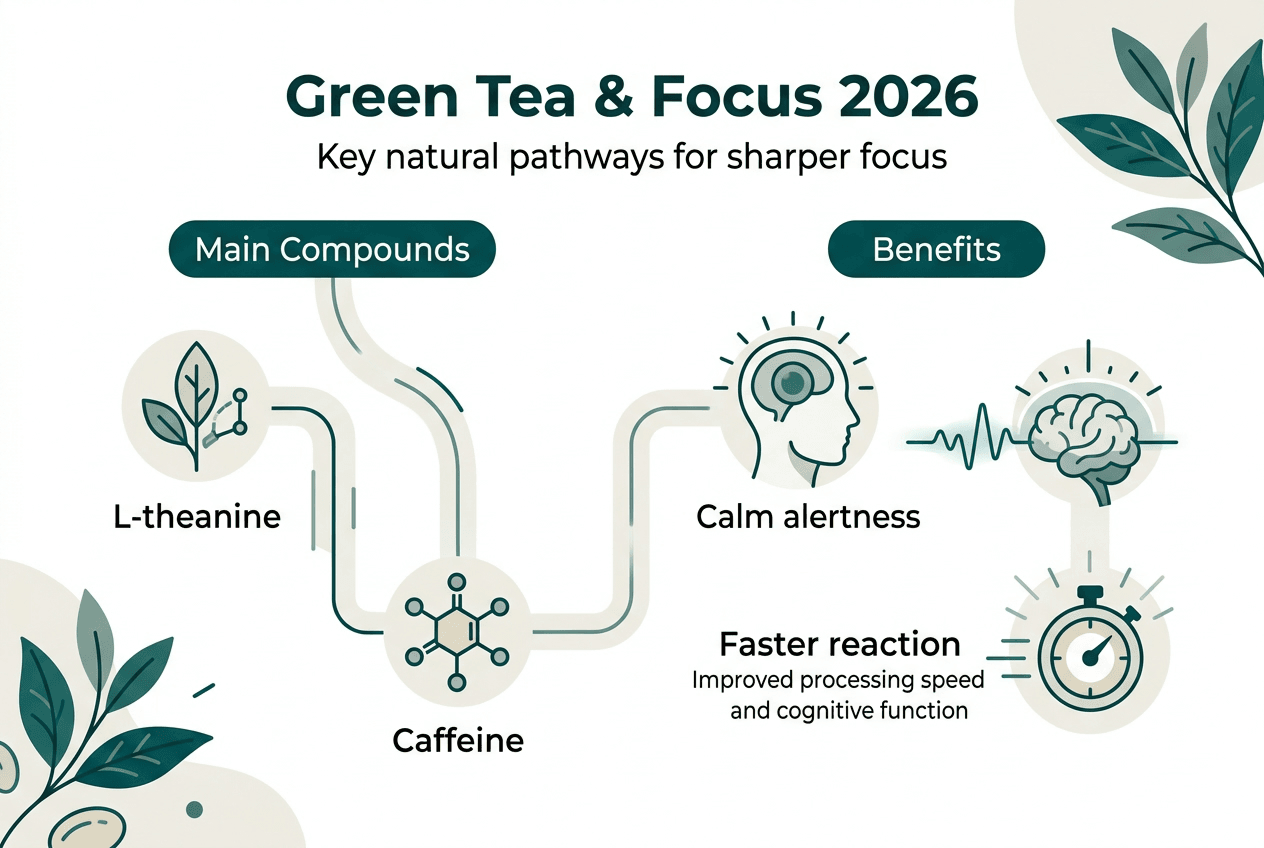
Green tea contains two primary compounds that work together to sharpen mental performance: L-theanine and caffeine. While caffeine stimulates alertness by blocking adenosine receptors in your brain, L-theanine crosses the blood-brain barrier and increases alpha wave activity, promoting a state of relaxed attention. This combination creates a cognitive sweet spot where you feel alert yet calm, focused yet flexible.
The synergy between these compounds is remarkable. L-theanine and caffeine together improve cognitive performance, attention, and working memory more effectively than either compound alone. The typical ratio in green tea ranges from 1:1 to 2:1 (theanine to caffeine), though matcha often contains higher concentrations of both. This natural balance explains why green tea drinkers report fewer jitters and crashes compared to coffee consumers.
“L-theanine modulates caffeine’s stimulating effects, reducing anxiety and promoting sustained attention without the overstimulation that disrupts focus.”
Beyond these two star players, green tea contains catechins like EGCG, powerful antioxidants that support brain health. These compounds protect neurons from oxidative stress and may enhance cognitive function over time. The polyphenols in green tea also support healthy blood flow to the brain, ensuring your neurons receive adequate oxygen and nutrients during demanding mental tasks.
Key mechanisms of green tea’s focus enhancement include:
-
Alpha wave stimulation creating relaxed alertness
-
Dopamine and serotonin modulation improving mood and motivation
-
Reduced cortisol response to stress
-
Enhanced neural efficiency through improved neurotransmitter balance
This multi-pathway approach to cognitive enhancement sets green tea apart from simple stimulants. Rather than forcing your brain into overdrive, it optimizes existing neural pathways for smoother, more sustainable performance.
Scientific evidence: cognitive performance and selective attention
Research consistently demonstrates that the L-theanine and caffeine combination delivers measurable cognitive benefits. A rigorous study found that high-dose L-theanine-caffeine combination improves selective attention and reaction times in sleep-deprived adults. Participants receiving 200 mg of L-theanine with 160 mg of caffeine showed significantly better performance on attention tasks compared to placebo groups.
The improvements were substantial. Reaction times decreased by approximately 38 milliseconds, and participants demonstrated enhanced ability to discriminate between relevant and irrelevant stimuli. This selective attention boost is particularly valuable for knowledge workers who must filter distractions and maintain focus on complex tasks. The study also revealed improved hit rates on attention tests, meaning participants correctly identified target stimuli more frequently.
What makes these findings particularly compelling is their application to real-world scenarios. The study tested acutely sleep-deprived adults, a condition many professionals and students face regularly. The fact that green tea compounds maintained cognitive performance under these challenging circumstances suggests robust neuroprotective and performance-enhancing effects.
Pro Tip: For maximum cognitive benefit, consume green tea 30 to 60 minutes before mentally demanding tasks. This timing allows L-theanine and caffeine to reach peak blood concentrations when you need them most.
The calming component of L-theanine proves especially valuable during high-pressure situations. While caffeine alone might increase anxiety during stressful tasks, the addition of L-theanine creates calmer energy that supports focus without triggering the fight-or-flight response. This makes green tea an ideal choice for sustained cognitive work, exam preparation, or any situation requiring both alertness and emotional regulation.
Beyond L-theanine and caffeine: other brain-boosting compounds and individual factors
While L-theanine and caffeine receive the most attention, other compounds like EGCG contribute significantly to green tea’s cognitive benefits. EGCG, the most abundant catechin in green tea, crosses the blood-brain barrier and provides antioxidant protection to neurons. This compound may enhance neuroplasticity, the brain’s ability to form new connections and adapt to learning.
Green tea also contains smaller amounts of other bioactive compounds including quercetin, kaempferol, and various B vitamins that support neurotransmitter synthesis. These nutrients work synergistically with the primary active ingredients to create a comprehensive cognitive support system. The polyphenols in green tea have been linked to improved cerebral blood flow, which ensures your brain receives adequate oxygen during intensive mental work.
The quality of your green tea matters significantly. Higher-grade teas, particularly matcha, contain greater concentrations of L-theanine and beneficial polyphenols. Matcha provides the entire leaf in powdered form, delivering more brain nutrients than steeped tea where many compounds remain in the discarded leaves.
Practical tips for using green tea to enhance focus
Implementing green tea into your focus routine requires strategic timing and dosing. For most people, consuming green tea 30 to 60 minutes before cognitively demanding tasks produces optimal results. This allows sufficient time for L-theanine and caffeine to be absorbed and reach peak concentrations in your bloodstream.
-
Start with moderate daily doses of 50-100 mg of L-theanine from 2 to 3 cups of quality green tea.
-
Aim for a theanine to caffeine ratio near 1:1 for the smoothest focus without overstimulation.
-
Time your consumption strategically, avoiding green tea within 6 hours of bedtime to prevent sleep disruption.
-
Choose high-quality green tea or functional beverages that clearly list L-theanine and caffeine content.
-
Monitor your individual response and adjust intake based on how you feel, not arbitrary guidelines.
-
Avoid exceeding 400 mg of caffeine daily from all sources to prevent anxiety and sleep issues.
Common pitfalls to avoid include consuming too much caffeine, which triggers jitters and anxiety rather than calm focus. Some people experience mild drowsiness from high L-theanine doses, particularly when taken without adequate caffeine. If this occurs, adjust your ratio by choosing a tea with slightly higher caffeine content or reducing your L-theanine intake.
Pro Tip: L-theanine can reduce caffeine-related side effects, but balance is essential. If you experience jitters, increase L-theanine relative to caffeine. If you feel too relaxed, slightly boost caffeine intake.
Consistency produces the best results. Rather than using green tea sporadically, incorporate it into your daily routine at consistent times. Your body adapts to regular intake, optimizing the cognitive benefits while minimizing potential side effects. Many people find morning and early afternoon consumption provides sustained focus throughout their most productive hours.
Boost your focus naturally with Lucent matcha energy drinks
If you’re looking for a convenient way to harness green tea’s focus-enhancing compounds, Lucent offers a refined solution. Our matcha-based energy drinks combine premium Japanese green tea with essential vitamins and minerals, delivering the perfect balance of L-theanine and caffeine for calm, sustained focus. Each zero-sugar formula is designed to support mental clarity without the crashes or jitters of traditional energy drinks.

Explore our range of flavors and discover how brain-supporting nutrients can transform your daily performance. Whether you prefer individual cans or want to sample multiple varieties, our mixed pack options make it easy to find your perfect focus companion. Experience the difference that quality ingredients and thoughtful formulation make in your cognitive performance.
FAQ
Is green tea caffeine content enough to boost focus compared to coffee?
Green tea contains less caffeine than coffee, typically 50 mg per cup versus coffee’s 90 mg. However, the combination with L-theanine produces smoother, more sustained focus without the jitters or crashes common to coffee. Optimal cognitive enhancement comes from the synergy of compounds, not caffeine quantity alone.
How much green tea should I drink daily to improve focus safely?
Start with 1 to 3 cups of quality green tea daily, providing approximately 100 to 400 mg of L-theanine. Monitor your response and adjust based on your caffeine tolerance and sensitivity. Avoid exceeding 400 mg of total daily caffeine from all sources to prevent anxiety, sleep disruption, or other side effects.
Can green tea help with focus if I’m sleep deprived?
Research demonstrates that the L-theanine and caffeine combination significantly improves selective attention and reaction times in sleep-deprived individuals. Green tea provides alertness with calming effects, making it more effective than caffeine alone for maintaining cognitive performance under challenging conditions. However, adequate sleep remains essential for long-term brain health and optimal function.
What is the best time of day to drink green tea for focus?
Consume green tea 30 to 60 minutes before mentally demanding tasks for peak cognitive benefits. Morning and early afternoon are ideal for most people, allowing compounds to reach maximum blood concentrations during productive hours. Avoid green tea within 6 hours of bedtime to prevent sleep disruption, as even moderate caffeine can affect sleep quality.
Are there any side effects from drinking too much green tea?
Excessive green tea consumption can cause caffeine-related side effects including jitters, anxiety, rapid heartbeat, and sleep problems. Very high doses of L-theanine may cause drowsiness in some individuals. Stick to moderate amounts, typically 3 to 5 cups daily, and pay attention to your body’s signals to avoid adverse effects.















