

Posted by Lucent Team

Biohackers and tech workers constantly seek natural cognitive enhancers that deliver results without compromising long-term health. While coffee dominates the productivity landscape, green tea consumption is associated with a reduced risk of cognitive impairment and offers a fundamentally different kind of mental boost. Matcha green tea, in particular, combines caffeine with L-theanine to create calm alertness that lasts for hours without the jitters or crash. This article explains why green tea, especially matcha, has become the preferred cognitive enhancer for high performers seeking sustained focus, mental clarity, and long-term brain health.
Table of Contents
-
How Matcha Creates Calm, Focused Alertness With L-theanine And Caffeine
-
Comparing Matcha To Coffee And Other Stimulants For Cognitive Enhancement
-
Practical Tips For Incorporating Matcha Green Tea Into Your Cognitive Optimization Routine
Key takeaways
| Point | Details |
| Reduced cognitive decline risk | Green tea consumption shows strong evidence for lowering dementia and cognitive impairment risk across populations. |
| Calm alertness synergy | Matcha’s L-theanine and caffeine work together to promote focused attention without anxiety or jitters. |
| Sustained mental clarity | Unlike coffee’s spike and crash, matcha provides smooth energy lasting 4 to 6 hours. |
| Neuroprotective antioxidants | High-quality matcha delivers bioavailable EGCG and catechins that support brain health. |
| Optimal for daily use | Matcha fits seamlessly into productivity routines without the side effects of traditional stimulants. |
The science behind green tea’s cognitive benefits
Research consistently demonstrates that green tea offers measurable protection against cognitive decline. A comprehensive meta-analysis revealed that green tea shows protective effects for dementia and mild cognitive impairment, with an odds ratio of 0.63 for cognitive impairment among regular consumers. This protective effect appears dose-dependent, meaning higher consumption correlates with greater benefits, and remains effective across genders and particularly in Asian populations where green tea consumption is culturally embedded.
The neuroprotective mechanisms trace back to green tea’s rich polyphenol content. Catechins, especially epigallocatechin gallate (EGCG), combat oxidative stress in brain tissue and reduce inflammation that contributes to neurodegeneration. These compounds cross the blood-brain barrier and interact directly with neural pathways involved in memory formation and cognitive processing. For biohackers focused on longevity and brain optimization, this represents a foundational advantage over stimulants that merely mask fatigue.
Regular green tea consumption creates cumulative benefits rather than temporary performance spikes. Studies tracking participants over years show sustained cognitive function improvements, suggesting that how green tea boosts focus naturally involves both immediate effects and long-term structural support. The antioxidant activity protects neurons from damage while supporting healthy blood flow to the brain, creating an environment where mental performance can thrive.
Key neuroprotective mechanisms include:
-
EGCG reduces beta-amyloid plaque formation associated with Alzheimer’s disease
-
Catechins improve cerebral blood flow and oxygen delivery to brain tissue
-
Polyphenols modulate neurotransmitter systems including dopamine and serotonin
-
Antioxidants neutralize free radicals that damage neural cell membranes
-
Anti-inflammatory compounds reduce chronic brain inflammation linked to cognitive decline
For knowledge workers and entrepreneurs, these benefits translate into a cognitive foundation that supports peak performance today while protecting mental acuity for decades. The science positions green tea not as a quick fix but as a strategic component of comprehensive brain health optimization.
How matcha creates calm, focused alertness with L-theanine and caffeine
Matcha’s unique cognitive profile stems from its biochemical composition. Each gram of quality matcha powder contains approximately 30 to 40 milligrams of caffeine alongside 20 to 40 milligrams of L-theanine. This roughly 1:1 ratio creates what researchers call “calm alertness,” a state where mental clarity and relaxation coexist. Matcha’s L-theanine and caffeine promote mental clarity without jitters, making it ideal for sustained deep work sessions that demand both focus and creativity.

L-theanine works through multiple neural pathways to modulate caffeine’s stimulating effects. L-theanine crosses the blood-brain barrier, reduces glutamate, increases alpha waves, and stabilizes brain activity, creating a neurological environment optimized for concentration. Alpha brain waves, associated with relaxed alertness, increase within 30 to 40 minutes of L-theanine consumption. This neural state supports creative problem solving and sustained attention without the mental tension that often accompanies high caffeine intake.
The synergistic effects extend to measurable performance improvements. Research demonstrates that the L-theanine and caffeine combination improves selective attention and reaction time in cognitive tasks requiring rapid decision making. Participants show enhanced accuracy on attention-switching exercises and reduced mental fatigue during extended work periods. For tech workers managing complex codebases or entrepreneurs navigating multiple priorities, these improvements translate directly into productivity gains.
Beyond performance metrics, the L-theanine-caffeine combination addresses caffeine’s common side effects. The combination reduces caffeine jitters and anxiety by modulating excitatory neurotransmission and supporting GABA activity, the brain’s primary inhibitory neurotransmitter. This creates smooth energy without the heart palpitations, anxiety, or digestive discomfort that many experience with coffee. The result feels less like artificial stimulation and more like natural mental clarity.
Key benefits of the L-theanine-caffeine synergy:
-
Enhanced focus and selective attention for complex cognitive tasks
-
Reduced anxiety and jitteriness compared to caffeine alone
-
Improved reaction times and cognitive flexibility
-
Sustained mental energy without mid-afternoon crashes
-
Better stress resilience during high-pressure work periods
Comparing matcha to coffee and other stimulants for cognitive enhancement
Biohackers evaluate cognitive enhancers across multiple dimensions beyond simple caffeine content. Matcha, coffee, and energy drinks each create distinct physiological and cognitive effects that impact productivity differently. Matcha offers sustained mental clarity lasting 4 to 6 hours versus coffee’s rapid spike and crash, making it superior for extended work sessions requiring consistent focus.
Coffee delivers caffeine rapidly, creating an intense but short-lived boost. Blood caffeine levels peak within 30 to 45 minutes, producing noticeable alertness but often accompanied by jitters, increased heart rate, and digestive upset. The subsequent crash, typically occurring 3 to 4 hours post-consumption, leaves many reaching for another cup and perpetuating an energy rollercoaster. For deep work requiring several hours of uninterrupted concentration, this pattern proves counterproductive.
Energy drinks present their own challenges for cognitive optimization. While they deliver high caffeine doses, many contain added sugars that cause blood glucose spikes and crashes independent of caffeine effects. Artificial ingredients, excessive B-vitamins, and proprietary stimulant blends create unpredictable responses. The heightened anxiety and overstimulation many experience with energy drinks interferes with the calm, controlled focus necessary for complex problem solving.
Matcha’s whole-leaf consumption delivers advantages beyond the L-theanine-caffeine synergy. Matcha contains more bioavailable polyphenols and antioxidants than steeped tea or isolated supplements, providing comprehensive neuroprotection alongside cognitive enhancement. Each serving supplies 10 to 15 times the antioxidants of regular green tea because you consume the entire leaf rather than just the water extract. This amplifies the long-term brain health benefits while supporting immediate mental performance.
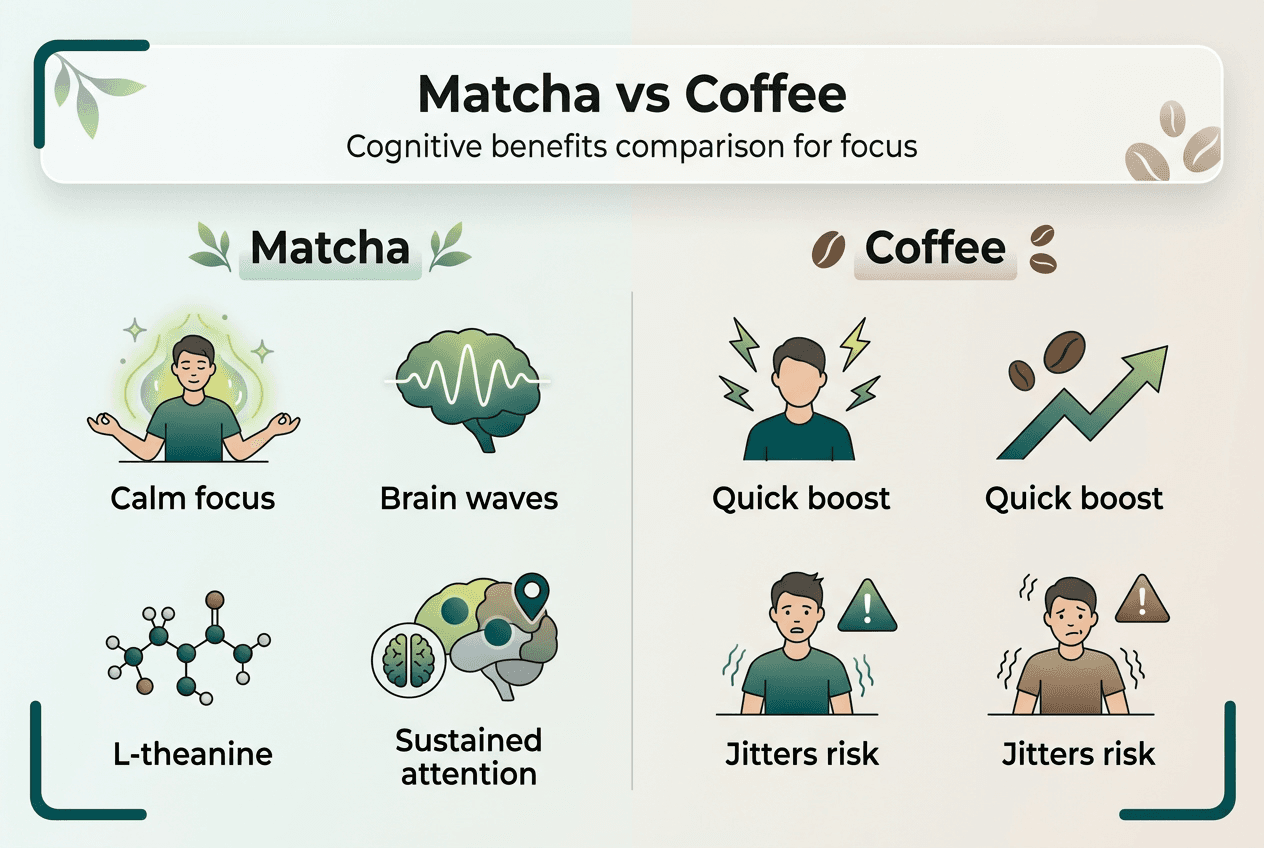
Key comparison points for biohackers:
-
Cognitive impact quality: Matcha produces relaxed focus ideal for creative and analytical work, while coffee creates tension-filled alertness better suited for physical tasks
-
Duration and stability: Matcha’s extended release prevents the productivity-killing crashes that disrupt workflow
-
Side effect profile: Matcha’s minimal side effects support sustainable daily use without building problematic dependencies
-
Antioxidant and nutrient density: Matcha delivers brain-supporting compounds that coffee and energy drinks lack entirely
-
Long-term sustainability: Matcha supports brain health over decades rather than just masking fatigue temporarily
For knowledge workers optimizing for both immediate performance and long-term cognitive health, matcha’s profile proves superior. The comparison reveals why matcha vs coffee vs energy drinks consistently favors matcha among biohackers who track their cognitive metrics carefully.
A simpler way to integrate matcha green tea into a focus routine
Many productivity routines recommend preparing matcha manually and experimenting with different doses to find the ideal balance of caffeine and L-theanine. While this approach works for some people, it also adds friction. Measuring powder, whisking, and managing dosing can make consistency difficult, especially during busy workdays.
A simpler approach is to use a ready-to-drink format built around the same principles. Lucent is designed around matcha green tea as the foundation, delivering naturally occurring caffeine, L-theanine, and green tea polyphenols in a clean, convenient format. The drink pairs this tea base with Vitamin B6, Vitamin B12, magnesium bisglycinate, and Vitamin C to support steady energy and mental clarity.
Because the formulation is already balanced, there is no need to measure powder or adjust dosing. Each can provides a consistent amount of matcha green tea and nutrients in a zero sugar drink designed for focused work sessions, creative tasks, and long periods of mental performance.
For many people, the key to cognitive optimization is consistency. Instead of preparing matcha multiple times per day, having a reliable drink that delivers the same steady effect each time helps build a repeatable routine.
Practical ways to use Lucent in a focus routine:
-
Drink one can 20 to 30 minutes before starting a focused work session or physically
-
Use Lucent as a replacement for afternoon coffee to maintain steady energy
-
Pair with hydration and short movement breaks to maintain cognitive performance
-
Use during long work blocks such as coding sessions, writing, or strategic planning
-
Keep a consistent routine to help train your brain to associate the ritual with deep work
The natural balance of caffeine and L-theanine in matcha green tea produces a smoother alertness than typical high caffeine drinks. Instead of sharp stimulation followed by energy crashes, the effect is typically described as calm, sustained focus that supports longer periods of attention.
Lucent builds on this principle by combining matcha green tea with essential nutrients and removing the sugar that often drives the highs and lows associated with traditional energy drinks. The result is a clean, non carbonated drink designed to support focus, mental clarity, and steady energy throughout the day.
For entrepreneurs, knowledge workers, and people who spend long hours thinking, creating, or solving problems, convenience matters. Lucent makes it easy to incorporate matcha green tea into a daily performance routine without preparation or guesswork.
Explore Lucent matcha energy drinks for sustained focus
For busy biohackers, entrepreneurs, and knowledge workers, convenience matters. Lucent brings together Japanese matcha green tea with Vitamin B6, Vitamin B12, magnesium bisglycinate, and Vitamin C in a clean, zero sugar drink designed for steady energy and mental clarity. Instead of preparing matcha throughout the day, Lucent delivers the natural balance of caffeine and L-theanine in a simple, ready-to-drink format that fits easily into modern focus routines.
FAQ
Is matcha green tea safe for everyone?
Matcha is generally safe for most healthy adults when consumed in moderate amounts. However, avoid matcha if pregnant, caffeine-sensitive, or on certain medications like nadolol or other beta-blockers that interact with caffeine. People with liver conditions should consult their doctor before regular use, as very high doses of concentrated catechins may stress liver function. Always discuss new supplements with your healthcare provider if you have existing health conditions.
How much matcha should I start with to avoid jitters?
Begin with approximately 1 gram, roughly one-half teaspoon, to assess your individual tolerance. Starting dose around 1 gram matcha powder is recommended for most people new to matcha or sensitive to caffeine. Monitor your response over several days, noting any jitters, anxiety, or sleep disruption. You can gradually increase to 1.5 or 2 grams if you tolerate the initial dose well and want stronger cognitive effects, or reduce to 0.5 grams if you experience overstimulation.
When is the best time to drink matcha for focus without affecting sleep?
Consume matcha 20 to 30 minutes before focused work sessions for optimal cognitive benefits. Consume matcha about 20 minutes before deep work and avoid late-day intake to prevent sleep disruption. The L-theanine and caffeine reach peak blood levels within 30 to 60 minutes, creating ideal conditions for sustained attention. Avoid matcha after 2 PM, as even its gentler caffeine can interfere with sleep architecture and reduce sleep quality when consumed in late afternoon or evening.
How do I identify high-quality matcha for maximum cognitive benefits?
Look for ceremonial-grade matcha with a vibrant, luminous green color and fine, silky texture. High-quality matcha has vivid luminous green color and silky texture resulting from proper shade-growing and stone-milling techniques. Dull, yellowish, or brownish matcha indicates oxidation and lower L-theanine content. Quality matcha should smell fresh and grassy, not stale or hay-like. Choose stone-milled varieties from reputable suppliers who provide transparency about sourcing and testing, as this ensures optimal cognitive compounds and purity.















