

Posted by Lucent Team

TL;DR:
- Sustained energy refers to steady, long-lasting levels without spikes or crashes, achieved through balanced nutrition and stable blood glucose. Most energy drinks rely on high caffeine and sugar, causing quick spikes followed by crashes, unlike functional beverages that promote calm alertness via ingredients like L-theanine. Building consistent habits with smart food, hydration, sleep, and carefully formulated drinks enhances overall focus and productivity.
You grab a coffee at 8 a.m., feel sharp until 10, then hit a wall by noon. Sound familiar? The assumption that more caffeine or a sugary snack solves your energy problem is one of the most common traps in modern productivity culture. True sustained energy means steady, long-lasting levels without the spikes and crashes, and it comes from how your body processes fuel over time, not how fast you can spike your blood sugar. This guide breaks down what sustained energy actually means, why functional beverages are emerging as a smarter solution, and how you can start making it work for you every day.
Table of Contents
- What is sustained energy?
- How your body produces and maintains steady energy
- Why most energy drinks fail (and how functional beverages are different)
- How functional energy drinks support all-day focus and productivity
- A fresh perspective on natural sustained energy — what most people miss
- Ready to experience real sustained energy?
- Frequently asked questions
Key Takeaways
| Point | Details |
|---|---|
| Sustained energy explained | True sustained energy means steady, crash-free focus powered by stable blood sugar and balanced nutrients. |
| Functional drinks advantage | Smart energy beverages with caffeine, L-theanine, and B-vitamins support long-lasting productivity without jitters. |
| Avoid sugar crashes | Choose functional options over sugary or stimulant-heavy drinks to maintain stable energy and mental clarity. |
| Personalize your approach | Everyone reacts differently, so fine-tune your drink choice and serving size for your unique body and routine. |
What is sustained energy?
Most people think of energy as an on/off switch. You’re either awake and sharp, or you’re dragging. In reality, energy is a spectrum, and the goal is to stay in a stable, productive zone throughout the day.
Sustained energy refers to steady, long-lasting energy levels without spikes and crashes, primarily achieved through stable blood glucose from low-glycemic foods, balanced macronutrients, and avoiding rapid sugar highs. When your blood glucose stays level, your brain has a consistent fuel supply. When it swings up and down, focus fluctuates with it.
“Sustained energy isn’t about feeling wired. It’s about staying clear, calm, and capable for hours at a stretch.”
Here’s what sustained energy actually looks like in practice:
- No mid-morning crash after your first cup of coffee
- Steady mental clarity through your most demanding tasks
- Stable mood rather than irritability as energy dips
- Consistent physical alertness without relying on repeated caffeine hits
- Smooth wind-down in the evening rather than a hard crash
The key driver is blood glucose stability. Low-glycemic foods and balanced meals release glucose gradually, giving your body and brain a consistent supply. Rapid-release options, like a candy bar or a sugary energy drink, spike glucose fast. Your pancreas fires out insulin, glucose drops sharply, and you crash. To sustain energy naturally all day, the foundation has to be stable blood sugar, supported by smart nutrition and ingredient choices.
Macronutrient balance matters too. Protein slows digestion. Fiber buffers glucose absorption. Healthy fats extend the release window. Together, they’re your best tools for avoiding the rollercoaster.
How your body produces and maintains steady energy
With the concept of sustained energy in mind, let’s explore the mechanics behind it, because understanding how your body manages energy helps you make much smarter choices about what you consume.
The brain uses about 20% of your daily calories as glucose, and the steadiness of that supply directly affects your focus and alertness. Low-glycemic foods sustain cognitive performance by slowing digestion through protein, fiber, and fat, keeping that glucose drip steady rather than flooding and receding.
Here’s how the process unfolds step by step:
- You eat or drink something. The composition of your meal or beverage determines how fast it breaks down.
- Blood glucose rises. The speed of that rise depends on the glycemic index (GI) of what you consumed.
- Your pancreas releases insulin. Insulin moves glucose into your cells for energy use or storage.
- Energy reaches your brain and muscles. A gradual rise means a longer, steadier supply. A sharp rise means a fast peak followed by a steep drop.
This table shows the difference between high-GI and low-GI choices, and why it matters for your energy levels throughout the day:
| Food/Drink | Glycemic Index | Energy Release | Brain Impact |
|---|---|---|---|
| White bread / sugary drink | High (70+) | Fast spike, fast crash | Short burst, then fog |
| Oats / whole grain bread | Medium (56-69) | Moderate, more stable | Steady focus |
| Japanese matcha drink | Low | Slow, gradual | Calm, sustained alertness |
| Nuts and seeds | Low | Very slow | Long-lasting clarity |
| Protein-rich meal | Low (combined) | Extended digestion | Consistent mental energy |
The brain doesn’t tolerate fuel gaps well. Even a small dip in blood glucose can cause difficulty concentrating, irritability, and that familiar “foggy” feeling. Keeping the curve smooth is the mission.
Pro Tip: If you’re eating something fast-digesting, like fruit or a slice of toast, pair it with a source of protein or healthy fat. Even a handful of almonds alongside a banana changes the glucose curve significantly.
To support this from a beverage perspective, you’ll want to also think about how you can reduce caffeine crashes by choosing drinks that slow caffeine absorption rather than amplifying the spike.
Why most energy drinks fail (and how functional beverages are different)
Knowing how sustained energy works inside you makes it easy to understand where common energy drinks go wrong, and how smarter alternatives deliver real, lasting benefits.
Most traditional energy drinks are built around two things: high doses of caffeine and large amounts of sugar. Both are fast-acting stimulants. Both cause spikes. And both set you up for a crash. Simple carbohydrates cause rapid blood sugar spikes followed by crashes, while complex carbs lead to a more gradual rise. Traditional energy drinks lean hard on that quick hit.
Red flags to watch for in any energy beverage:
- High sugar content (often 25-40g per can)
- Excessive caffeine (300mg+ in a single serving)
- Artificial stimulants like taurine in large doses or proprietary “energy blends” with unclear dosages
- No stabilizing ingredients to buffer the caffeine hit
- Short-lived effects that require repeated dosing throughout the day
Functional beverages take a different approach. They use carefully selected ingredients designed to work together, not just hit hard and fade fast. Effects vary by individual, with response rates ranging from 50 to 88% depending on the combination and dosage used, and factors like task type matter too, so the smartest functional drinks account for that by keeping caffeine levels moderate and pairing it with calming, focus-enhancing compounds.
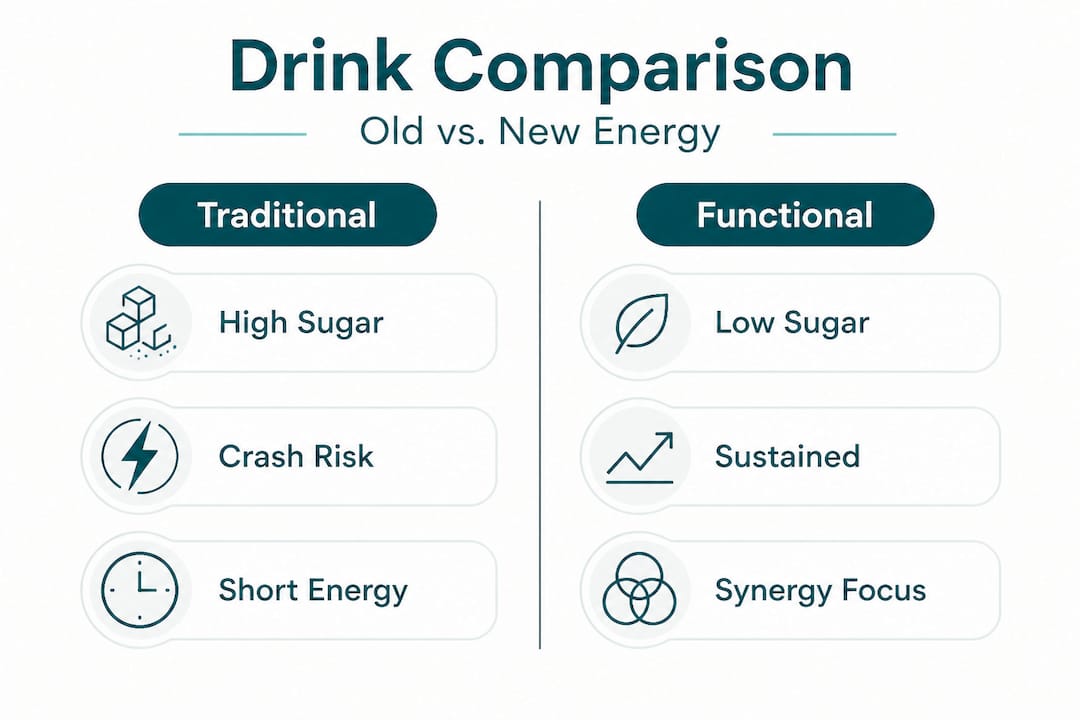
| Feature | Traditional energy drinks | Functional beverages |
|---|---|---|
| Primary energy source | Sugar + high caffeine | Low-GI base + moderate caffeine |
| Caffeine level | Often 200-300mg+ | Balanced, 80-150mg range |
| Stabilizing add-ins | Rarely present | L-theanine, adaptogens, B-vitamins |
| Energy curve | Sharp spike and crash | Steady, gradual rise |
| Side effects | Jitters, crash, anxiety | Calm alertness, minimal side effects |
| Sugar content | High (25-40g typical) | Zero or very low |
Understanding the risks of sugary drinks goes beyond just blood sugar. Regular high-sugar consumption is linked to mood instability, reduced cognitive performance over time, and dependency on that spike to feel alert. That’s the opposite of sustainable productivity.
Functional drinks that center on green tea for focus like matcha-based options, use a naturally slower caffeine release mechanism alongside L-theanine to smooth the curve and deliver alertness without that familiar edge.

How functional energy drinks support all-day focus and productivity
Having understood the pitfalls and smart choices in energy beverages, let’s zero in on how these functional options actually work and how you can use them wisely to stay locked in all day.
The most scientifically supported combination in functional beverages is caffeine paired with L-theanine. Research shows that caffeine combined with L-theanine improves reaction time by up to 40 milliseconds, enhances attention accuracy, and sustains energy expenditure for over 120 minutes without the crash associated with caffeine alone. That’s a meaningful, measurable difference in your ability to stay productive.
For health-conscious adults focused on performance, functional beverages with caffeine and L-theanine, combined with B-vitamins and adaptogens, provide natural sustained energy for focus and productivity while helping maintain blood sugar stability. It’s a formula built for the modern workday.
Here’s how to choose a functional drink that will actually support your energy and focus:
- Check the caffeine dose. Look for 80-150mg per serving, enough to activate alertness without overloading your system.
- Look for L-theanine on the label. This is what separates calm focus from jittery stimulation.
- Scan for B-vitamins. Vitamin B6 and B12 support cellular energy metabolism and help your body convert nutrients into usable fuel more efficiently.
- Avoid added sugars. Zero sugar or naturally low-sugar options keep your glucose curve smooth and won’t undercut the functional ingredients.
- Note the full ingredient list. Adaptogens like ashwagandha or rhodiola add resilience against stress and support cognitive performance under pressure.
Pro Tip: Drink your functional beverage with or just after a balanced meal, not on an empty stomach. Pairing it with food slows absorption, stabilizes blood sugar, and lets the ingredients work with your body rather than creating an isolated spike.
When comparing your options, it’s also worth understanding how matcha compares to coffee and energy drinks as a focus booster, since the source of caffeine affects how quickly it enters your bloodstream and how long it lasts. If you’re ready to move beyond caffeine alone, there are excellent natural energy alternatives that deliver real, lasting results.
A fresh perspective on natural sustained energy — what most people miss
Here’s what most articles on this topic won’t tell you: the problem isn’t just what you’re drinking. It’s the sequence of assumptions you’ve built around energy.
Most people go looking for a single fix. A better coffee. A smarter energy drink. One supplement that changes everything. But the research doesn’t support the silver bullet narrative. Caffeine alone raises blood pressure and can cause jitters, and while L-theanine mitigates those effects, the combination doesn’t deliver meaningful gains for strength or endurance. Individual variability is real, with response rates between 50 and 88%, and some trials show no significant effect on sustained attention for certain people. That’s not a knock on functional drinks. That’s just honest science.
What experience and research together actually reveal is this: ingredient synergy matters more than any single compound. Caffeine needs L-theanine to shine. L-theanine needs caffeine to give it purpose. B-vitamins need the right dietary foundation to do their job. Blood sugar stability needs food quality, hydration, and sleep to hold up.
The trends shaping modern energy drinks reflect a shift in the market toward exactly this kind of synergistic thinking, and that’s encouraging. But the real leverage is in recognizing your own body’s patterns. When do you naturally dip? What did you eat beforehand? How well did you sleep?
Sustained energy is a marathon. Building the habits around it, consistent meal timing, smart beverage choices, hydration, and sleep, compounds over weeks, not hours. One great functional drink won’t undo a bad night’s sleep, but consistently choosing clean, well-formulated beverages alongside real food creates a baseline that steadily improves your day.
The best advice isn’t to drink more, take more, or optimize harder. It’s to pay closer attention to what already works for your body, then layer in evidence-backed tools to support it.
Ready to experience real sustained energy?
You now have a clear picture of what sustained energy really means, what drives it physiologically, and what separates a genuinely functional beverage from a hyped-up sugar spike. The right drink doesn’t just taste clean. It works with your body’s own systems to keep you focused, steady, and productive from morning through the afternoon.
Lucent is built around exactly this science. Zero sugar, premium Japanese matcha, naturally occurring caffeine and L-theanine, and a formula that includes Vitamin B6, B12, and Vitamin C for clean, steady mental performance. No jitters. No crash. Just calm, clear energy that matches how you actually want to work. If you want to understand exactly why Lucent works and what makes each ingredient earn its place in the formula, the full breakdown is worth exploring.
Frequently asked questions
What foods or drinks provide the best sustained energy?
Low-glycemic foods, protein-rich snacks, and functional drinks with caffeine plus L-theanine support steady energy levels by stabilizing blood glucose and avoiding sharp spikes and crashes.
How do caffeine and L-theanine work together for energy?
Together, they sharpen alertness and improve attention while L-theanine smooths out caffeine’s side effects. Research shows this pairing sustains energy and focus for over 120 minutes without a crash.
Are there risks to drinking sustained energy beverages daily?
Most people tolerate well-formulated functional drinks without issues, but if you’re caffeine-sensitive or managing blood pressure, it’s smart to monitor your response and avoid high-dose products.
Will functional energy drinks improve both focus and physical performance?
Functional beverages clearly support focus and mental clarity, but effects on strength or endurance are more variable and less consistent across individuals.
Recommended
- Top trends shaping energy drinks for better focus – Lucent
- How to sustain energy naturally all day: A guide – Lucent
- Why avoid sugary energy drinks? Risks & smarter alternatives – Lucent
- Matcha Energy vs Coffee vs Energy Drinks: Which Is Best for Focus? – Lucent
- Top energy supplements for professionals: sharpen focus without the cr – IQ Pouch
- How Professionals Over 40 Sustain High Energy Daily















